Did the government get your Google user data?
This post was originally published on my previous domain, jessekohl.com, on November 14, 2012. It was recovered from the Wayback Machine. This may or may not have been edited slightly by AI.
The government wants Google user data.
The Google Transparency Report shows government surveillance on the rise. Google releases this report twice per year because they “think it’s important to shine a light on how government actions could affect our users.”
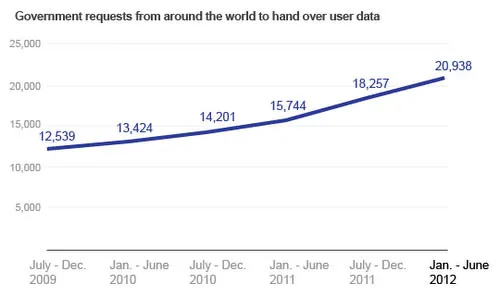
Overall, Google received 20,938 official requests for user data from governments – affecting about 16,281 users/accounts in the U.S. and 50 in Canada (big difference, eh?). Google fully or partially complied with 90% of the U.S. requests but only 24% of the Canadian ones. Another big difference. Literally, that’s a handful of users in Canada but thousands in the U.S.
But the real story is how much it’s growing. The average Google account these days contains a lot more information about a person than it did just a few years ago – with Gmail user growth and Google+ or other services tied so closely to mobile devices.
Here’s what the big picture looks like:
Source: Google.
Some might find this information surprising. As a digital marketer, I wasn’t. But I was surprised the numbers were so low. I would have guessed government requests for information would have been much greater in number, especially when you’re talking about global numbers. But maybe Facebook is higher priority in terms of tapping into user data. I don’t think Facebook has been quite as transparent about government requests for information about users, but Twitter followed Google’s lead this year by releasing its own transparency information.
These transparency efforts by search and social services are interesting and may inspire a little more trust in the services. But for me, there’s one thing missing…
But as a user concerned with my own user experience and data, I’d really like to see a big clickable button that reads: “Click here to find out if we’ve given your data to the government.” Or anybody else for that matter. Now that’s a call to action.